
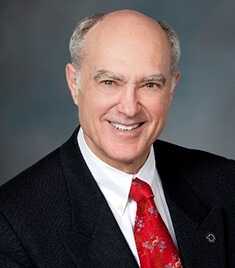
Dr. EDward M. Amet, an American Board Certified Prosthodontist and Implant Dentist, can do much to improve the appearance and natural beauty of the face. The position, shape, form, surface texture and color of the teeth, affect the look of the entire lower half of the face.
The success of prosthodontic treatment for improved facial appearance is directly related to good treatment planning. The goal of modern implant dentistry is to achieve integration of dental implants and provide restorative treatment that replaces a missing tooth or teeth and lost supporting structures, as well as to restore proper aesthetics and function. In order to achieve this goal, it is necessary for the patient and dentist to be able to visualize the final prosthetic results prior to implant/restorative treatment. Therefore, it is essential for the dentist to have a thorough understanding of all phases of treatment in order to diagnose, create a treatment plan and restore a natural appearance.
An approach to improved facial and dental appearance is whitening teeth with home or in-office power bleaching. Many times, however, there might be conditions such as wear, stained teeth or rotations that can best be corrected by improving tooth aesthetics with thin porcelain veneers to create a more symmetrical arrangement and appearance. Whenever this cosmetic dental procedure is done, designing the final shapes of the teeth with computer-generated imaging and diagnostic wax-up prior to treatment is critical.
Traditional crowns may also be used as a cosmetic dental solution to correct tooth appearance and problems. There are different types of crowns and materials used. Some are all porcelain that is constructed by pressing molten ceramic materials that are Lucite-reinforced and are bonded directly to the teeth or made of zirconia substructure with CAD/CAM technology and veneered with porcelain. Traditional dental crowns have been constructed of porcelain fused to a noble or high noble metal substructure or all gold. Since patient aesthetics is important and the crowns are often in the aesthetic zone, one of the porcelain-type systems is often used.
The type of laboratory porcelain-building technique used can determine how real the color appears. The more sophisticated porcelain crowns use a multi-porcelain layering technique, and the color is built within the crown’s porcelain. Simpler or standard crowns might have only three layers of porcelain for color control while the more cosmetic dental crowns may have eight or more layers. The margins or junction of the crown to the teeth might also be made totally of porcelain and blend into the root without a dark line. The type of tooth preparation by the prosthodontist, the material used in the building crowns and the skill of the technicians are the final determinants for clinical success.
Since the dental laboratory plays such an important role in the treatment, having an in-office laboratory with skilled technicians is critical to achieving the desired fit, aesthetics and functional results. The coordination of the artistic and cosmetic skills of the dentist and technician as a team determine the end result.
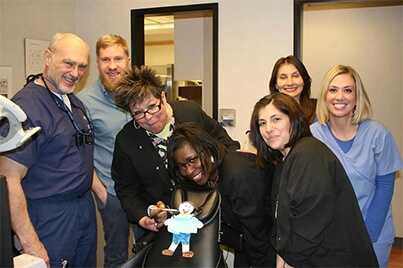
Dr. Amet provides comprehensive dental treatment, including a variety of cosmetic dental services. He founded the Reconstructive & Implant Dental Center in 1988 in Overland Park and the Reconstructive & Implant Dental Laboratory in 1994, and he has clinically practiced for 40 years and placed his first dental implant in 1974. He has extensive training and experience in both the surgical and prosthodontic phases of therapy, with skilled and talented on-site dental staff and technicians. These on-staff dental technicians with Dr. Amet make the prosthodontics personalized and cosmetic for each patient. “Our goal,” states Dr. Amet, “is to provide our patients with the finest quality of care, as comfortably and pain-free as possible.”


